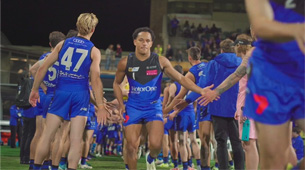
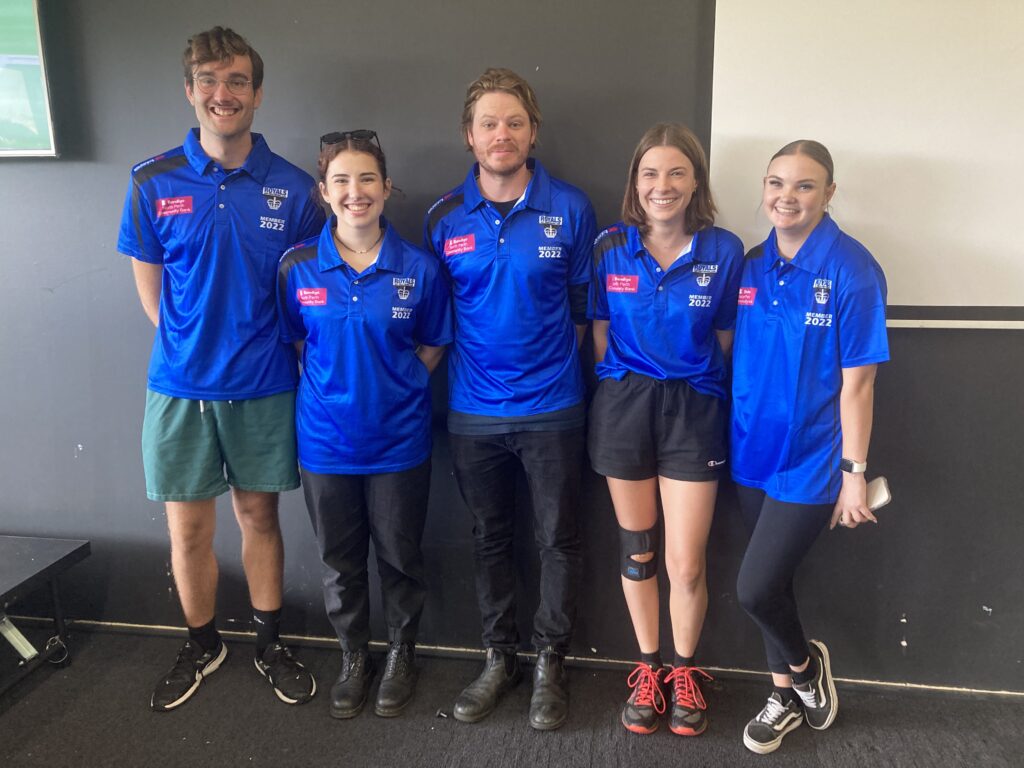
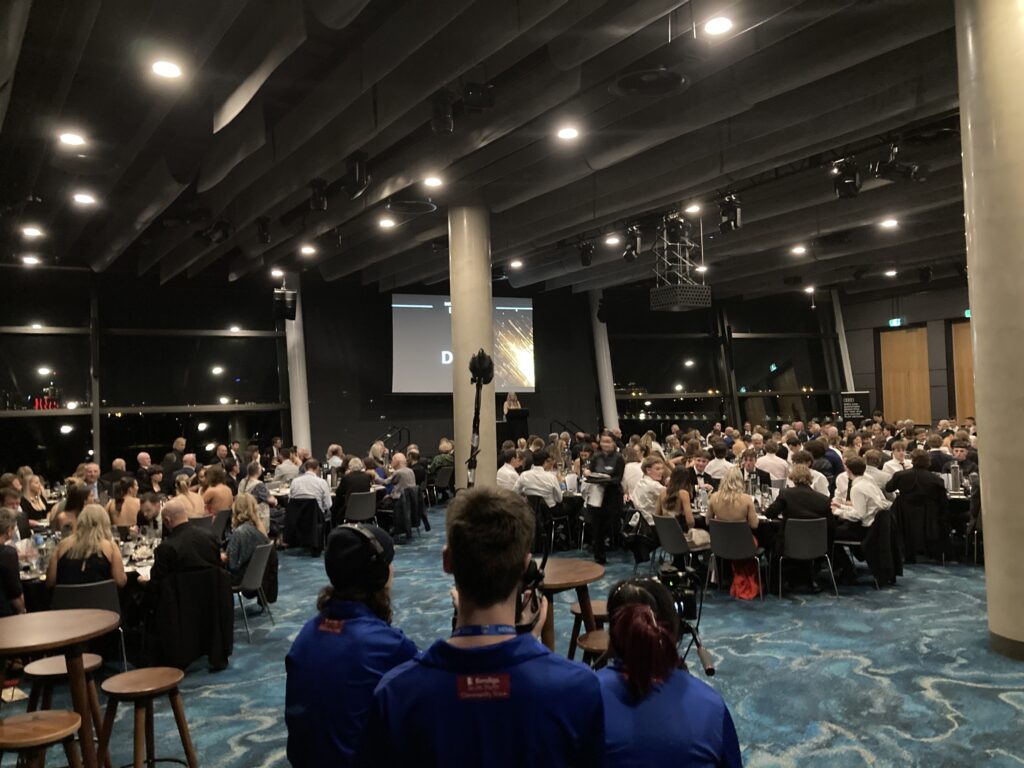
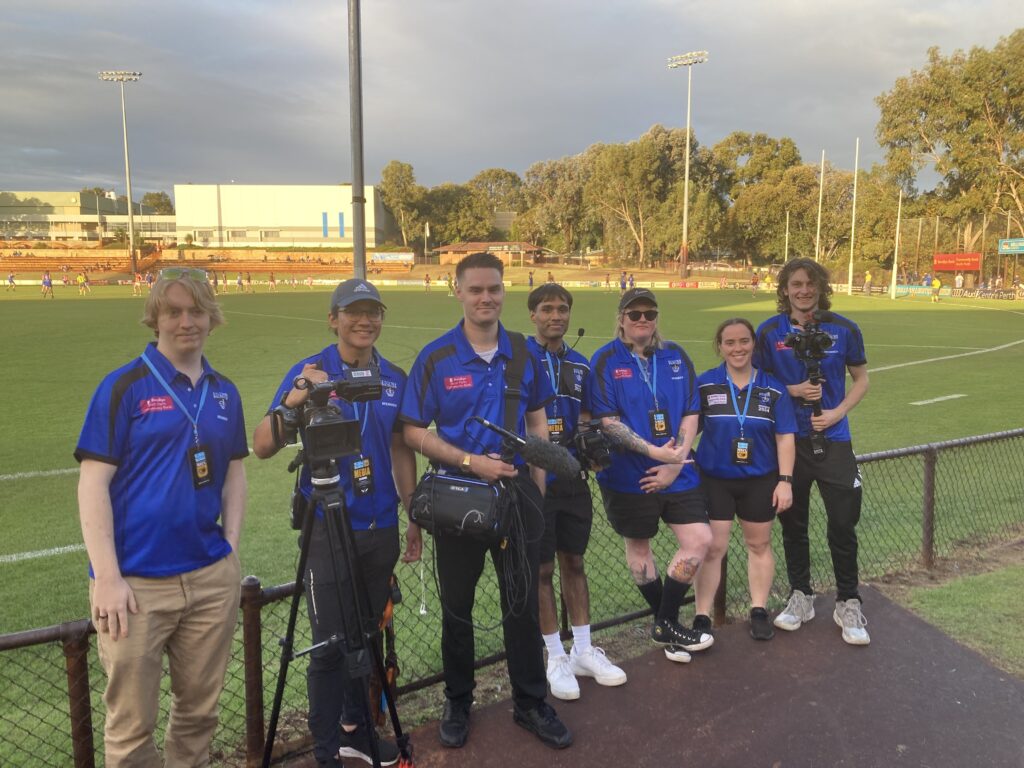
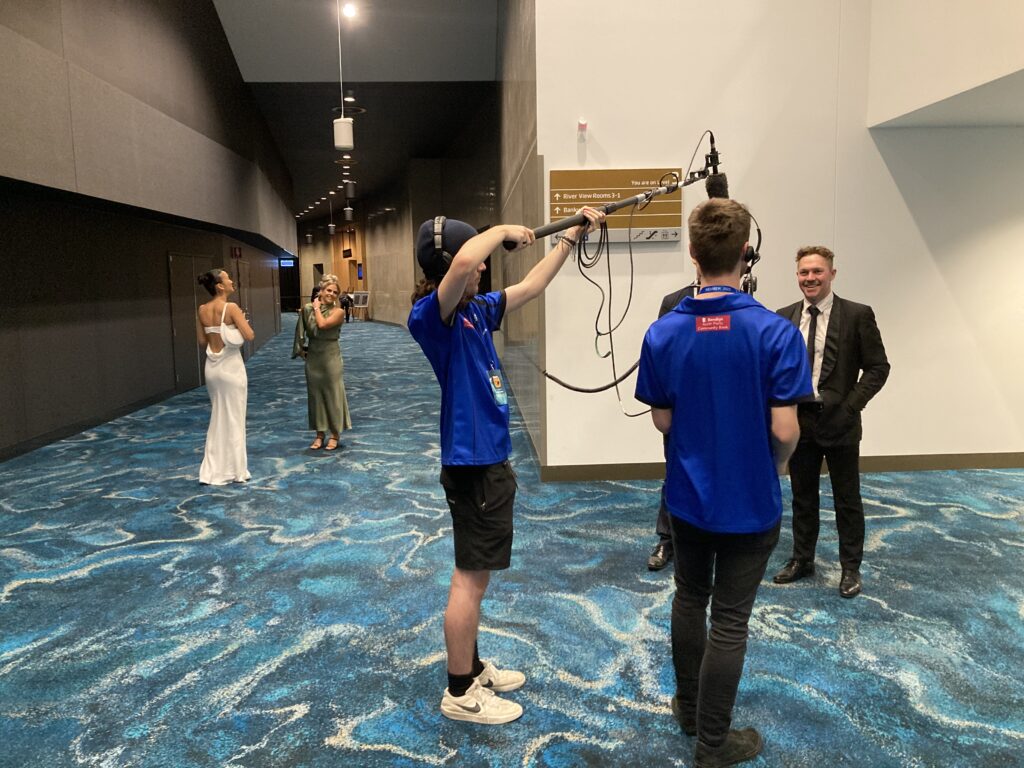
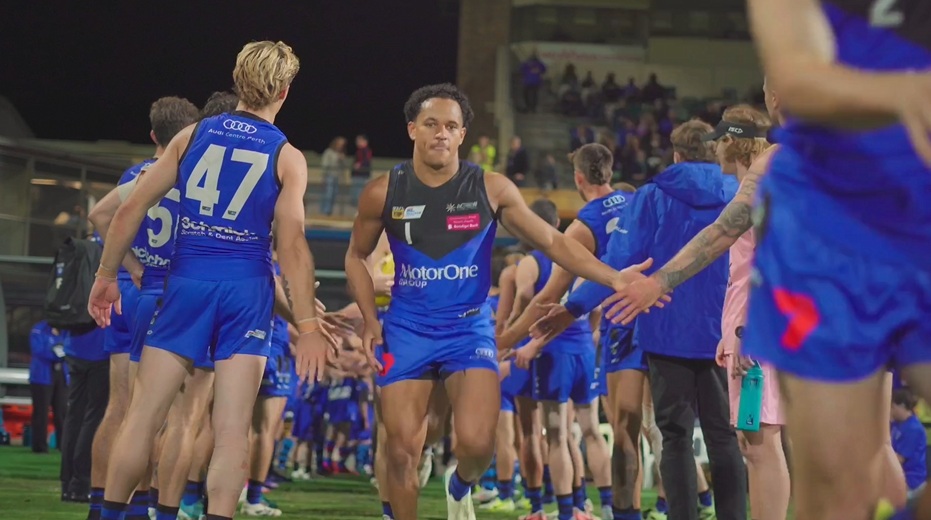
Throughout the WAFL football season, Murdoch University Screen Production students ( Kim, Zane, Alana, Evan & Meg ) focused on specific themes for each round of games, creating marketing, awareness, and social media materials to achieve client goals.
Round 1- “preseason hype and energy going into Round 1”
Posted on: Facebook 2.4k views, Instagram 1.2k views
TARGET AUDIENCE 18 – 30 year olds. Players, girlfriends, families and long-time members are already attending games. However, it is this age range that has lower numbers. Therefore, we’re trying to highlight why East Perth’s games are a great social day out with friends and promote that to this group.
Round 4- “Focus on – players to watch out for.”
TARGET AUDIENCE 18 – 30 year olds. Players, girlfriends, families and long-time members are already attending games. However, it is this age range that has lower numbers. Therefore, we’re trying to highlight why East Perth’s games are a great social day out with friends and promote that to this group.
MESSAGE This round, we are looking to answer the question: “Why come to a WAFL game, and particularly East Perth’s?”
Kickstart your weekend– attending a game with mates and watching East Perth. Then kicking on at a local bar or pub before heading out for the night with other events.
Stars of the Future- WAFL is a great entry way into the AFL. Stand-out players in this league have the potential to go professional. It’s important to keep highlighting key player moments (tackles, goals) as well as the spirit of the club
Cheap to attend– highlight that tickets to games are a cheaper alternative weekend entertainment option (
Round 6- “Focus on what makes EPFC different to other clubs – its culture.”
TARGET AUDIENCE 18 – 30 year olds. Players, girlfriends, families and long-time members are already attending games. However, it is this age range that has lower numbers. Therefore, we’re trying to highlight why East Perth’s games are a great social day out with friends and promote that to this group.
MESSAGE We would like to identify the reasons and hear from the supporters WHY they think EPFC is the best in the WAFL and highlight that. What sets them apart from other clubs? What is their point of difference from other clubs?
Round 8- “Focus on the long-standing rivalry between the clubs.”
TARGET AUDIENCE 18 – 30 year olds. Players, girlfriends, families and long-time members are already attending games. However, it is this age range that has lower numbers. Therefore, we’re trying to highlight why East Perth’s games are a great social day out with friends and promote that to this group.
MESSAGE This game is a clash between East Perth’s biggest Rival, West Perth. Both James and Glen have highlighted how this is an important game for the club and is one of the biggest home games of the season. They have also mentioned how personal the rivalry is between the two clubs, so let’s highlight that.
Round 9- “Behind the blue” – focus on the members of the club who either volunteer their time or are part of the team support (physios and trainers, etc).”
TARGET AUDIENCE 18 – 30 year olds. Players, girlfriends, families and long-time members are already attending games. However, it is this age range that has lower numbers. Therefore, we’re trying to highlight why East Perth’s games are a great social day out with friends and promote that to this group.
MESSAGE In this game, we are focusing on the key members of the club who aren’t on the field kicking goals. This includes trainers, physios, and volunteers.
Initially launched as a beta version, the original website aimed to host the annual virtual symposium for PR academics in Australia and disseminate publications and relevant information.
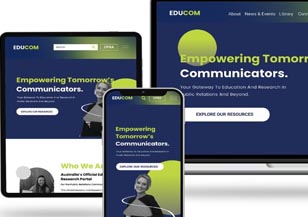
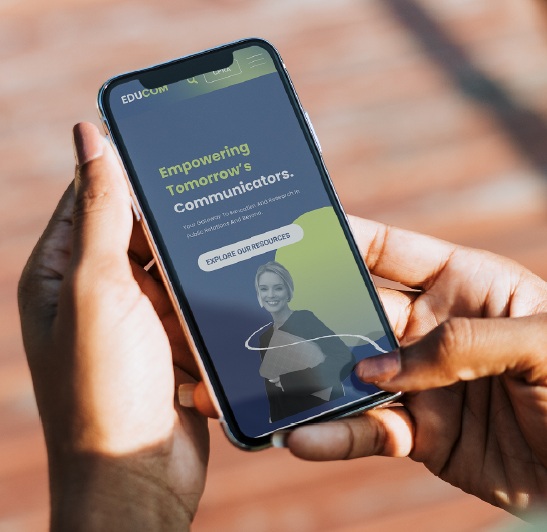
The students’ task was to transform the existing PRIA EDUCom portal into a fully functional and responsive website aligned with the rebranded identity of CPRA (Communication and Public Relations Australia). The portal serves as a platform for sharing academic content within the PR industry and academia in Australia and the Indo-Pacific region.
Client’s Goals
Access to Educational Content related to PR and Strategic Communication.
A platform where they can easily discover and access relevant resources
Opportunities for professional development, including webinars, workshops, conferences
Opportunities to connect with other professionals, academics, and students in the PR field for networking and collaboration purposes
User Research
User research in the context of a web design project will provide valuable insights into user behaviours and needs, informing the design process and ensuring that the final product achieves its intended goals. User research involved
Personas:
Market Profiles:
Empathy Map:.
User Journey Maps:
Point of View (POV) / How Might We (HMW)
Competitor Analysis:
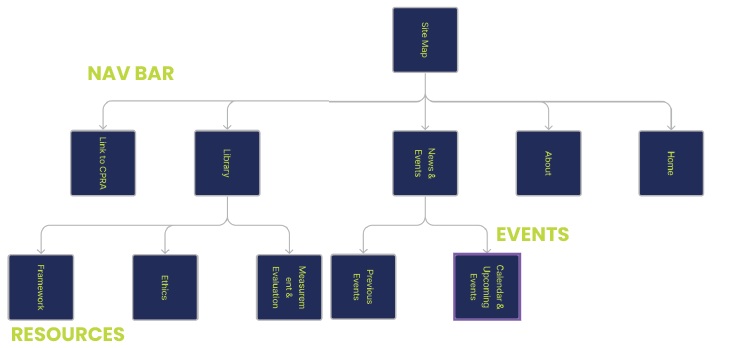
EDUCOM website sitemap
Content Strategy
Content strategy and information architecture work together in web design to ensure that information is structured logically and delivered purposefully, guiding users intuitively through meaningful, accessible, and goal-driven experiences. Content strategy involves-
Brand Identity Summary: aligning content to purpose and brand
SEO keywordresearch:
Content writing:
Speed Optimisation:
Accessibility:
Sitemaps
Wireframes
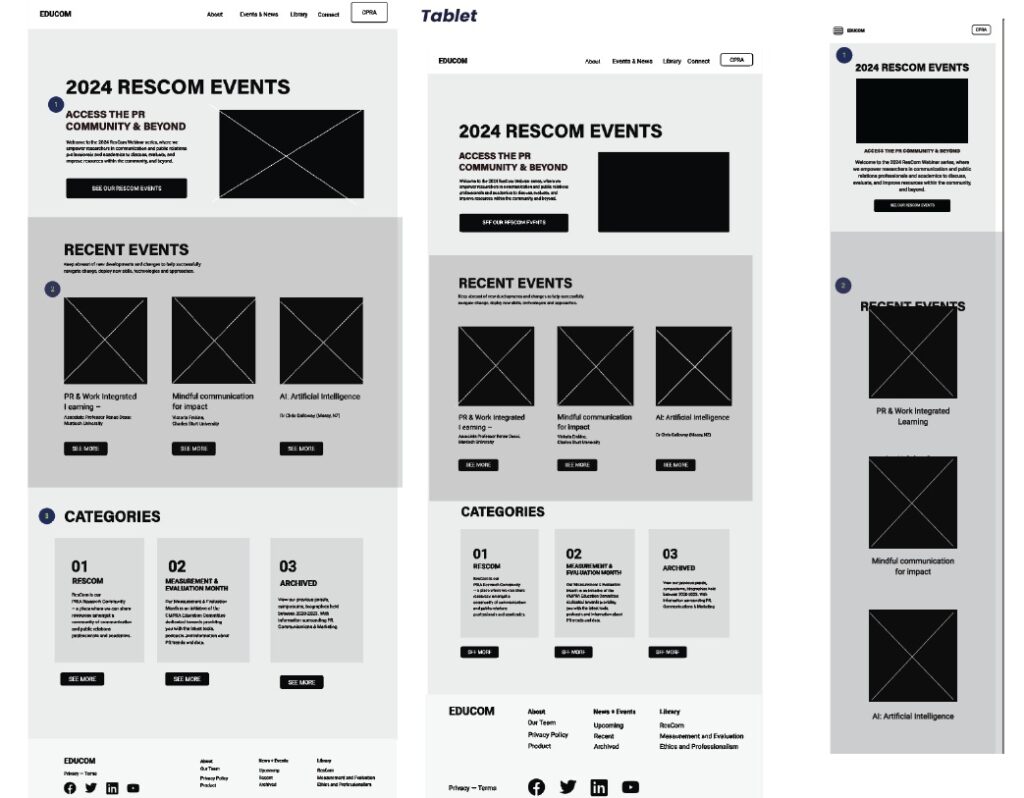
Educom website events wireframes
Visual Design
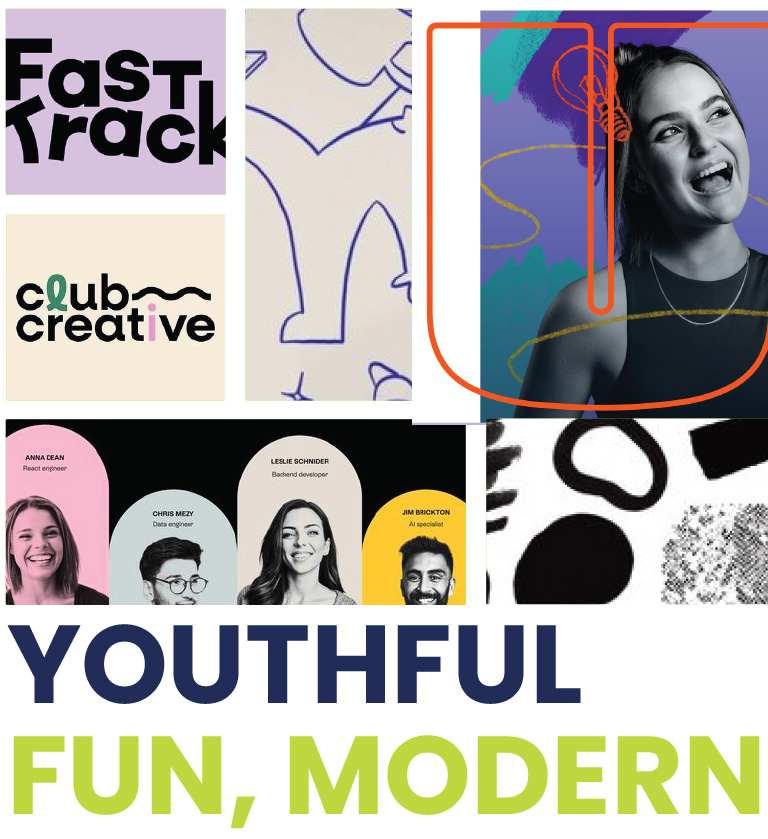
Mood Boards
Colour Bright and bold color palettes can instantly evoke energy, excitement, and playfulness. Opt for vibrant hues such as electric blue or lime green,
Images Black and white images offer high contrast, which can make colorful and vibrant elements pop against the background. Playing with overlapping layers to create visually engaging designs that capture attention.
Typography Dynamic fonts with playful and quirky characteristics to convey a youthful vibe. Experiment with bold lettering or playful script fonts, to add personality and energy
Graphics Using playful characters, & doodles can bring a sense of fun Whilst Hand-drawn elements can add a personal touch and convey a sense of creativity and individuality.
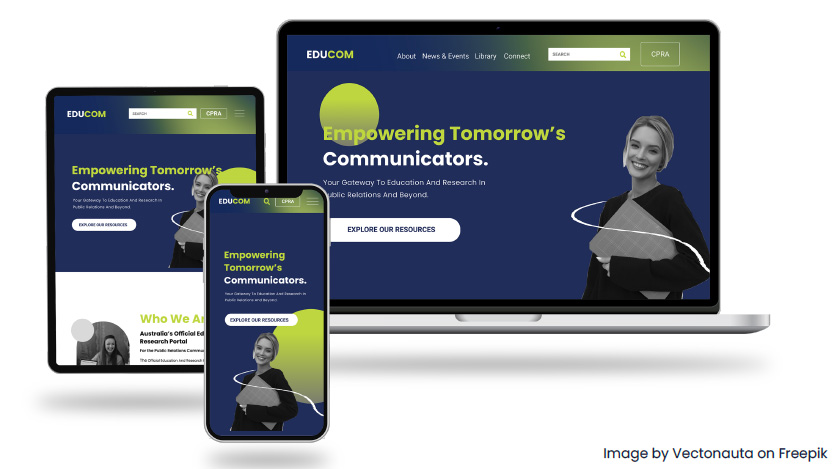
Mocks Ups/Final Chosen Design and WordPress Cuistom Theme Website build
Client Testimonial “It has been a pleasure working with you all. From the very start of the project, you have listened to me and taken all the pertinent information in for what is a challenging digital project. This project is almost 5 years old now, and very important to the national Education Community of CPRA and me, especially, and you were able to take the existing website and distil it into what will be the new direction forward. This was not an easy task but the team took my instructions and implemented a professional web brief from start to finish. This culminated in a beautiful website with a lot of potential for the future. So thank you.”
This Honour Board proudly recognizes the accomplishments of our Games Art and Design graduates. Over the years, Murdoch Games Art students have thrived and expanded their expertise, contributing to a diverse array of games and aligned industries worldwide. Explore their LinkedIn profiles below.
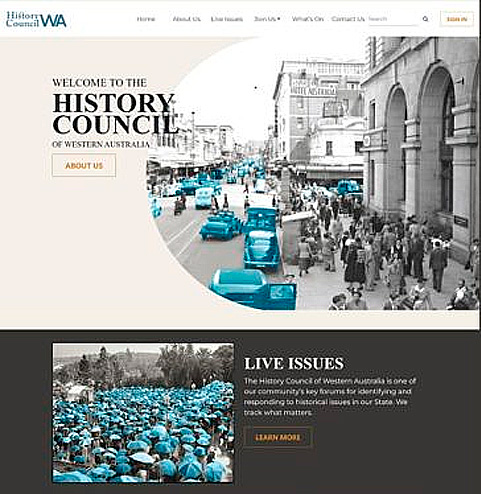
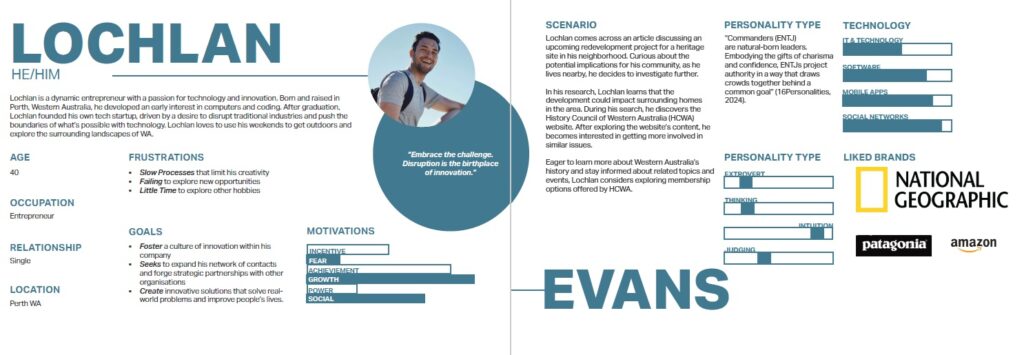
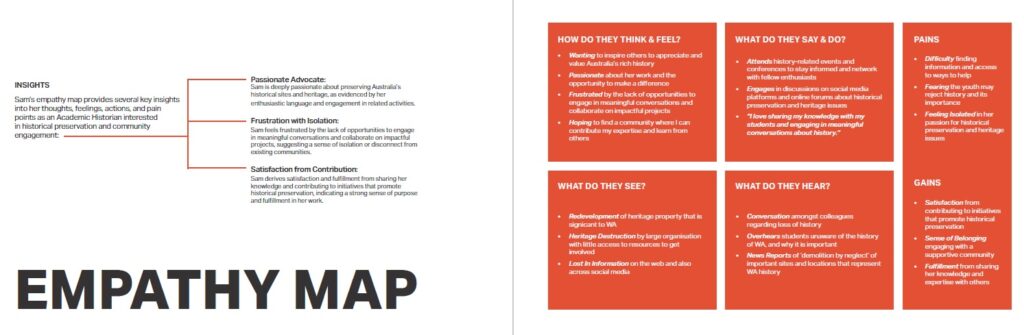
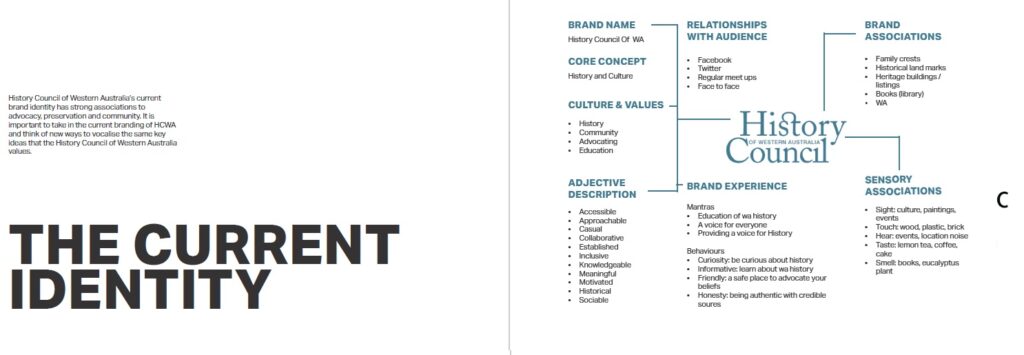
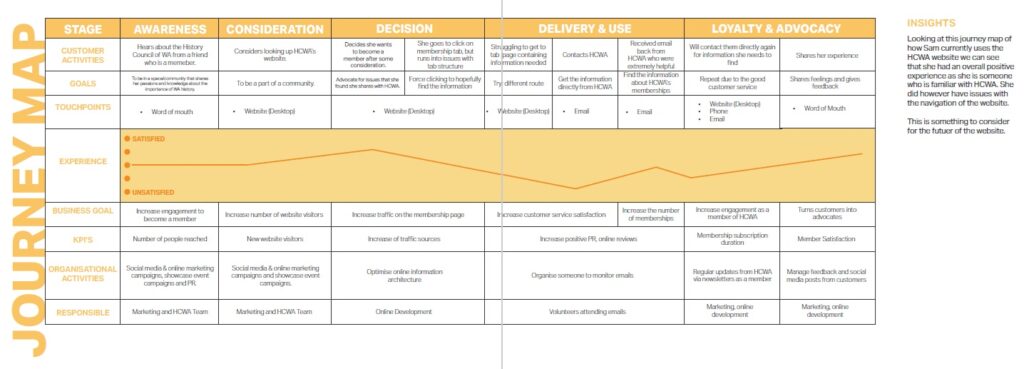
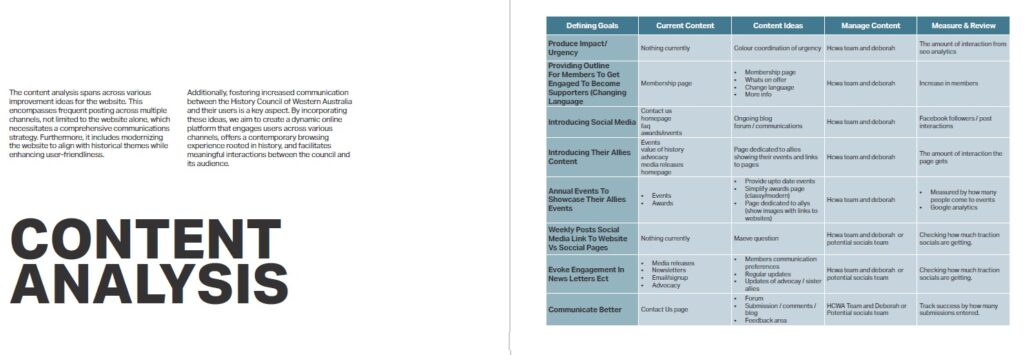
The History Council of Western Australia (HCWA) serves as the primary representative body for Western Australia’s historical community. With a commitment to preserving and promoting the historical heritage of the region, HCWA serves as a voice for stakeholders, including families, historical societies, Aboriginal organisations, universities, and other institutions dedicated to historical research and preservation. Through collaboration with students from the GRD338 Web Design unit, HCWA looks to enhance its digital presence, ensuring that its website effectively meets the evolving needs of its audience.
In collaboration with the MESH student team, HCWA aims to leverage its position as a leading voice in history to create a dynamic and engaging online platform. Through thoughtful design and user experience (UX) considerations, the website will serve as more than just a repository of historical information; it will be a vibrant hub for interaction, education, and community engagement.
Through a co-design and UX approach, the MESH student team will iteratively improve the website to meet HCWA’s goals and user needs effectively. This evidence-based approach ensures that our design solutions are not only visually compelling but also strategically aligned with HCWA’s mission and goals, fostering meaningful engagement with the history of Western Australia.
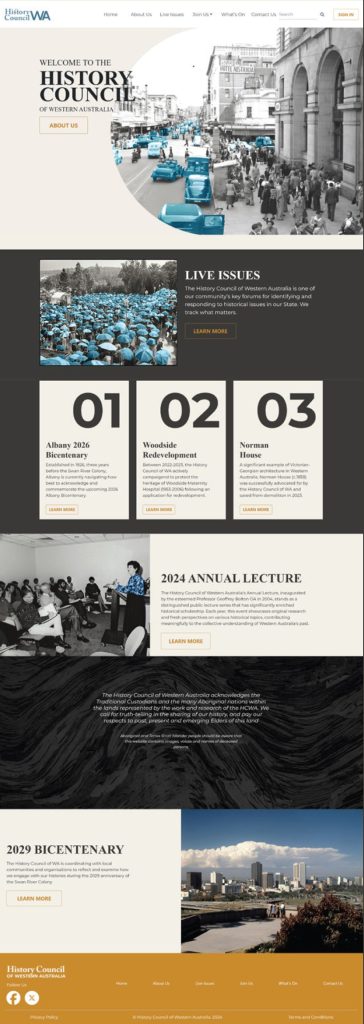
Project Timeline The project took 14 weeks to complete and involved- •Compiling research into a brief, so the client was able to choose a design direction and a content strategy •Producing design concepts •Testing the website for usability, accessibility and SEO •Developing the website and a custom theme in WordPress •Client sign-off and website launch
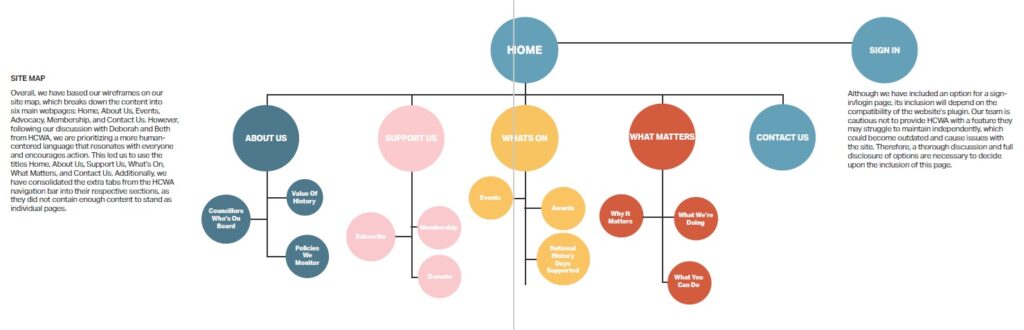
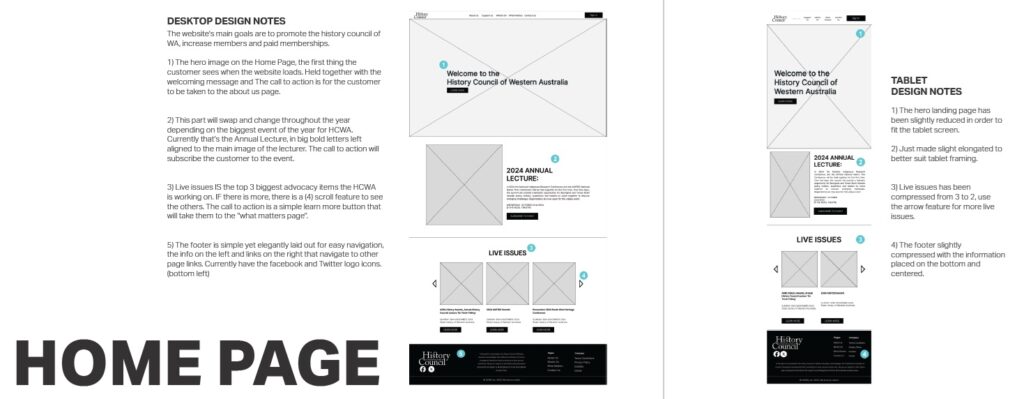
Site MapWebsite Wireframes
Client Testimonial
We recently had the pleasure of collaborating with Graphic Design students, Zarah, Thisari, Meagan, Jessica and Chet on the redevelopment of the History Council of WA’s public-facing website. We are beyond impressed with their professionalism, thorough preparation, and outstanding creative dedication throughout this entire process.
From the very first meeting, it was clear that this group was exceptionally well-organised. They came prepared with detailed plans, well-researched information, and a clear vision of how to achieve our objectives. Their ability to anticipate challenges and propose innovative solutions was commendable. Their reverse brief and the final product showed great attention to detail, and it was clear that they really listened and understood the needs, obstacles and character of the HCWA. Throughout the project, the students demonstrated a level of professionalism that was truly outstanding.
Their communication was prompt and clear, their commitment to deadlines was thorough, and their collaborative spirit fostered a productive and positive working environment. They approached every task with enthusiasm and originality, bringing fresh ideas and perspectives that significantly enhanced the project’s outcome. Their passion for excellence and attention to detail were evident in every aspect of their work.
We are incredibly grateful for the opportunity to work with such a talented and dedicated group. Zarah, Thisari, Meagan, Jessica and Chet exceeded all our expectations, and we would highly recommend them to anyone seeking a team that combines professionalism, meticulous preparation, and creative innovation. We have no doubts that they will each excel in their future careers.
Sincerely, Deborah Gare (Chair), Elizabeth Burns-Dans and Paul Taucher (members, HCWA)
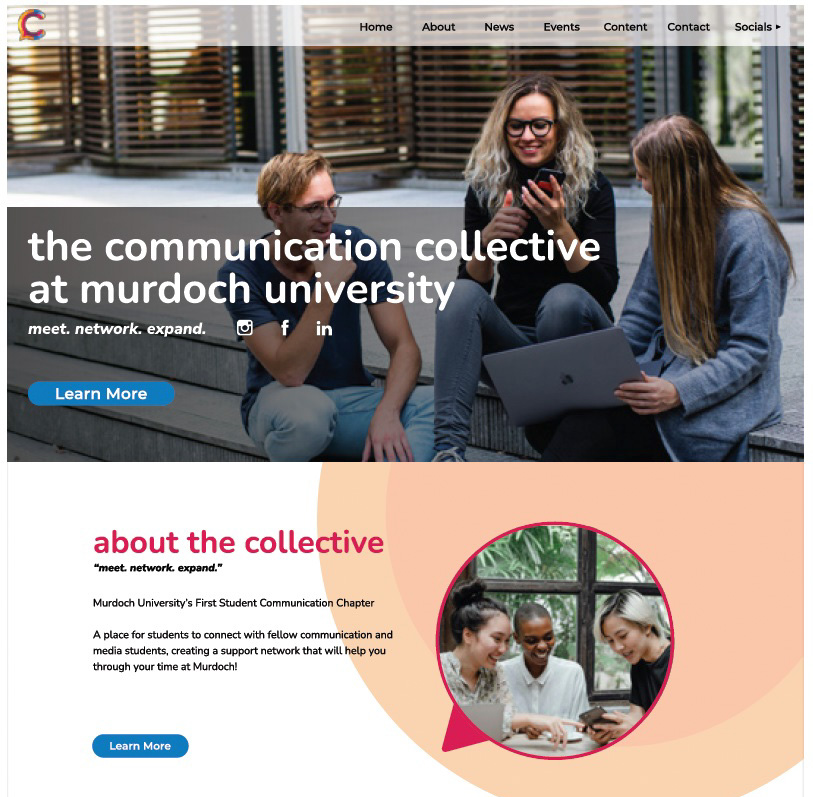
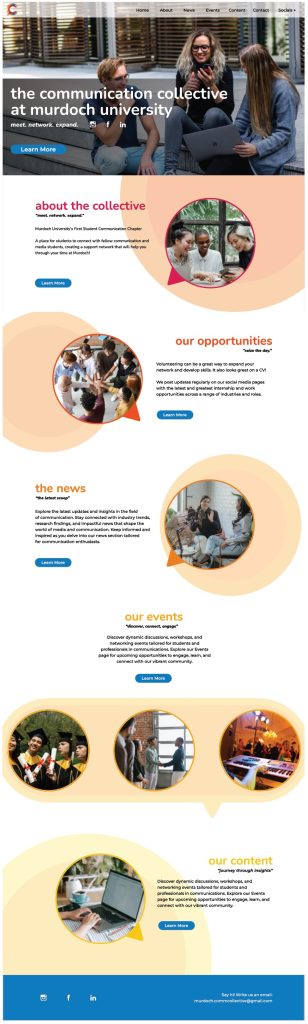
The Communication Collective is a student group dedicated to providing an extracurricular platform for communications students to connect and meet.
The purpose of the project is: •To promote the student chapter •To engage and attract members •To inform the public about events and provide information to future students •To work as a learning tool for student content and web creators •To gather data
Project Timeline The project took 14 weeks to complete and involved- •Compiling research into a brief so the client was able to choose a design direction and a content strategy •Producing design concepts •Testing the website for usability, accessibility and SEO •Developing the website and a custom theme in WordPress •Client sign-off and website launch
Client Testimonial It was a pleasure to work with the UX and WordPress design student team (Sean, Treyden, Adria and Jiabin) on the new website for The Communications Collective.
From the outset, the team’s communication was extremely professional, setting clear expectations regarding timelines, commitment, and production. They were also very patient with my limited availability!
I was particularly impressed with the level of detail and creative work that each of the students put into their individual concept designs, and I was not expecting to have such a high standard of work produced and presented at this level. It was hard to decide on the final design, as I would have been happy with any of the four.
Throughout my industry career, I have worked with many designers and web development teams and frankly, my experience with the GRD338 team was certainly among the best.
I am excited for the new Communication Collective website to be live and relish the symbiosis that our creative media students were involved in the creation of this website with and for our communication students.
I wish Sean, Trey, Adria and Jiabin the very best in their future web design careers – and I have no doubt they will be extremely successful in their pursuits.
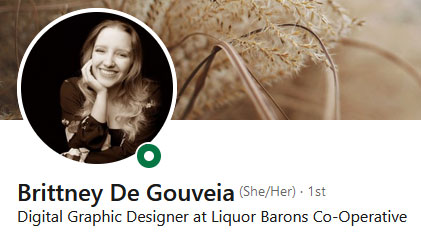
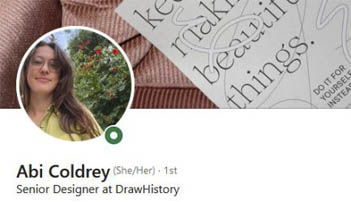
This Design Graduate Honour Board formally celebrates the achievements of our Digital Design and Graphic Design graduates from Murdoch University. Over the years, Murdoch Graphic Design students have evolved and flourished to participate in a diverse range of print, digital, UX, service, and design communication industries worldwide. See below for their LinkedIn profiles.
Double Major Options For Graphic Design Studentsat Murdoch University
At the School of Media and Communication, Murdoch University, we believe in creating opportunities for our students by allowing students to study double majors. With a Murdoch degree in Communication or Creative Media, you can choose to major in two separate subject areas rather than just one, all in the same three-year degree. By simply utilising your electives to build an entire second major, you have the opportunity to graduate with a Bachelor of Communication or Creative Media with two distinct specialisations.
Simply put, double majors mean you get two major skill sets for the price of one, for no extra money, with no extra time, and you double your chance of getting a job when you graduate.
Here is a list of double-major suggestions for those studying Graphic Design.
Double Major– Games Art and Design /Graphic Design Possible Job – Interface and Interaction Designer Interface Artists design, build and implement all aspects of a games or graphic interface. Collaborate with cross-functional teams, including developers, illustrators, graphics design, managers and testers, to provide optimal user experience for their customers. Created and maintain all user interface design deliverables, including UX research, wireframes, personas, mockups, and interactive prototypes. Continuing to research customer needs whilst keeping track of technology trends
Double Major–Photography /Graphic Design Possible job- Digital Content Producer, Print Content Producer Combining Photography and Graphic Design will enable graduates to enhance Photo research skills, engage content production from start to finish, define and deliver the style and feel of the branded content, gain experience in managing the workflow of print and digital content production, gain a good understanding of experience in research skills and best practice social media design.
Double Major– Screen Production/ Graphic Design Possible job-Titles Designer, Motion Graphics Designer Titles Designer, Motion Graphics Designer specialises in on-screen typography and visual effects creating the opening titles sequence, as well as intertitles or title cards in a film or television show.
Double Major– Web Communication/ Graphic Design Possible job- Web Strategy, Web metrics analyst, Social media strategy Students with a double major in Web Communications and Graphic Design will be engage both print and digital production and extend theses skills into strategic communication contexts. For example, graduates will be able to produce and administer social media content and campaigns, build and implement marketing sponsorships and promotions strategies, develop manage and implement digital and web strategy to drive people into a clients business, research and create appropriate daily for multiple social media platforms, create, maintain, edit, proof and upload website content across brands, create artwork to support online campaigns, identify trends and develop strategy to grow the social media community and progress the online presence of a business, monitor and measure the success of a digital campaigns and prepare regular management reports of key social media statistics and results.
Enquire online about your study options at Murdoch University, or apply now.
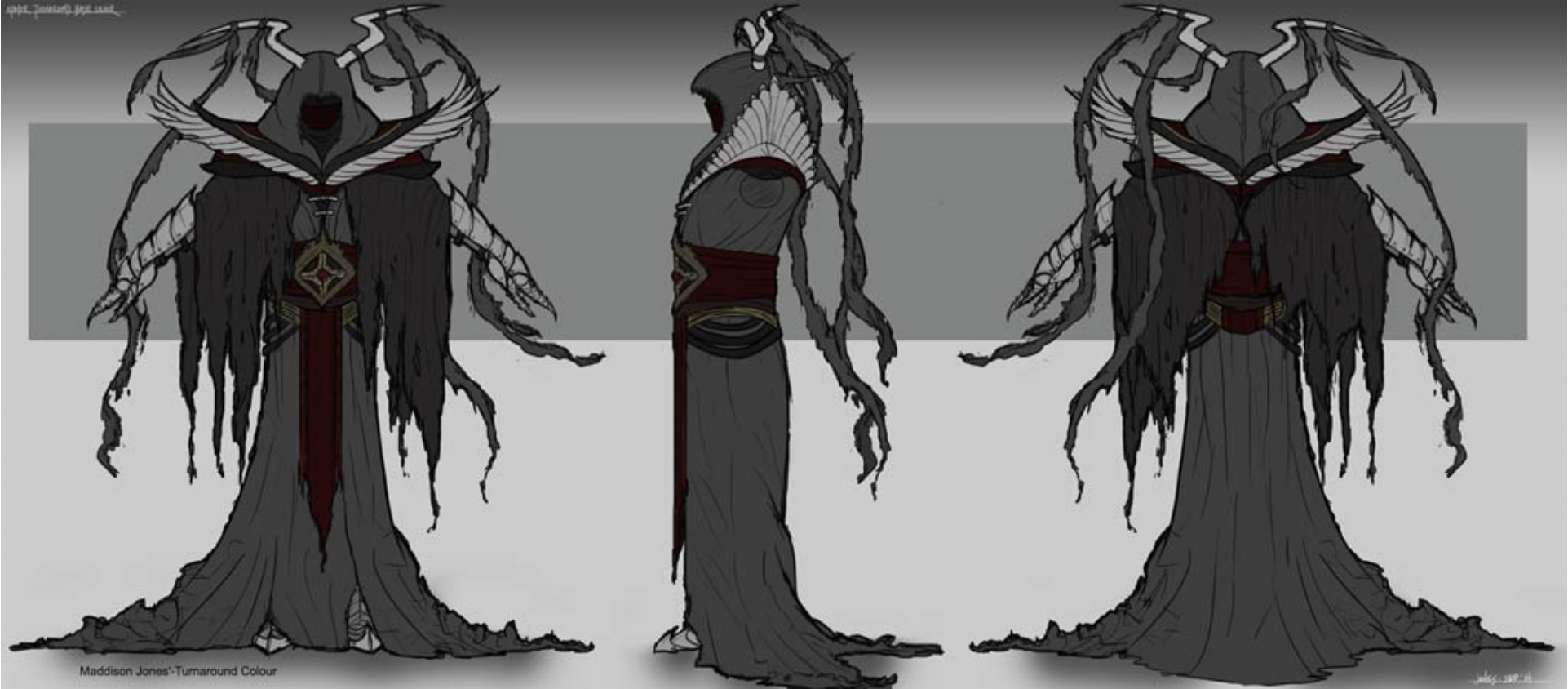
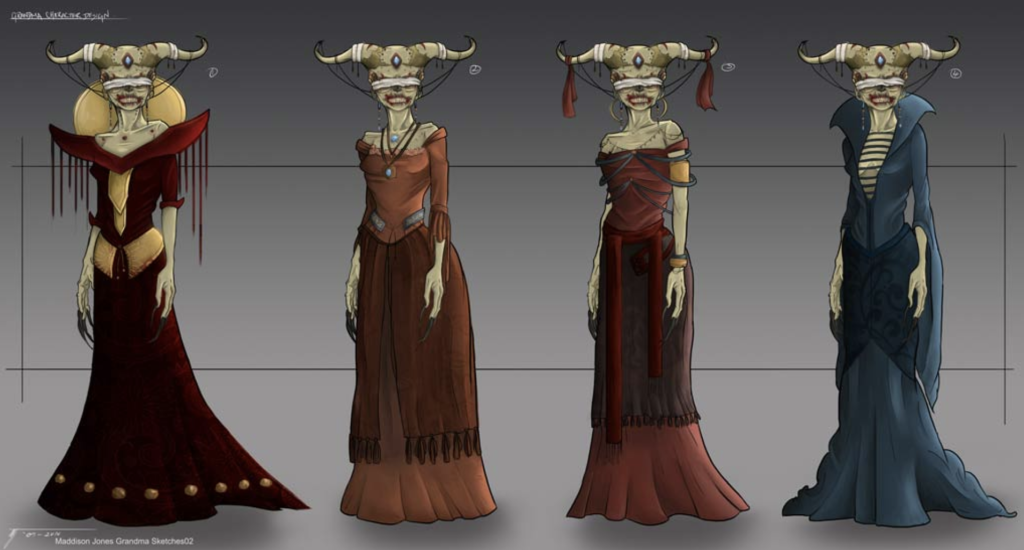
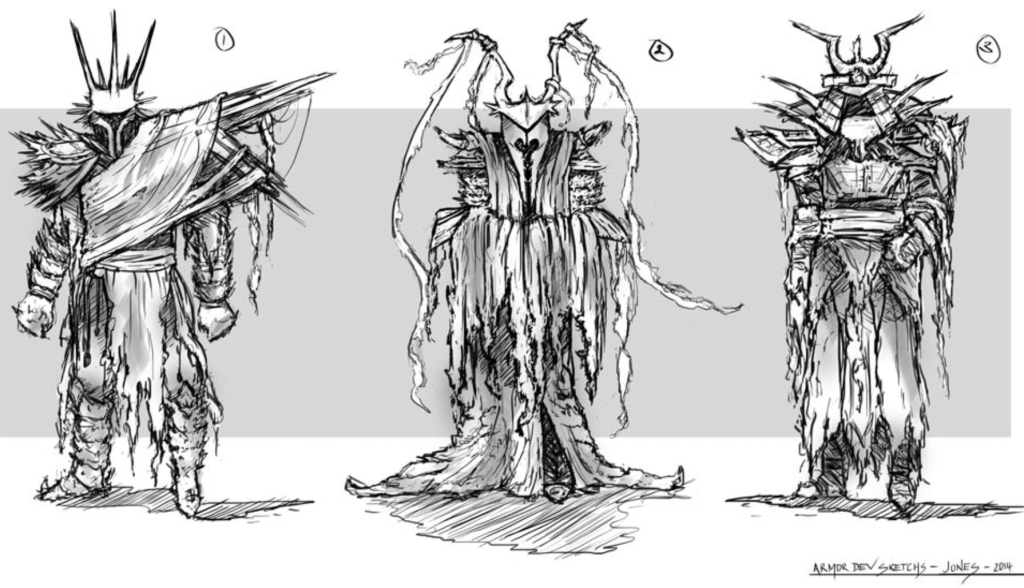
Games Art Graduate Maddison Jones who now lives and works in Sweden recently did an interview with MESH, here are the results.
Why did you choose Games Art and Design at Murdoch, and what have been the benefits?
I chose Games Art and Design after doing 2 years of Security and Counter Terrorism; not really knowing anything about the film or game industry. I knew I wanted to become a concept artist, and decided that this course would be the best way to dip my toes in all aspects of game development. It was. Not only did I learn tremendously about game and film development, but I was also able to try my hand at things I not only knew I was competent at like drawing, but also things I had never tried before like coding, animating and 3D modelling; all with the help of some very talented, well experienced industry professionals that I could call my lecturers.
What would be your advice to students entering the course?
Prepare yourself for late nights. Whether it was up till late finishing homework, waiting for something to render, or staying behind to work on a project with your friends in class, you must be prepared to work hard. The work load is demanding; but so it the industry this course prepares you for. I always made sure I put in 110%, and by doing so, I believe got the most out of not only my university experience, but my entire course. It taught me to never stop learning, teaching myself and never stop improving. Plus, I never had a unit that wasn’t fun or I didn’t enjoy, even those I found challenging, so make sure you give everything a go!
What has been your favourite unit in the course and why?
I had several. I highly enjoyed the Drawing units; drawing has always felt like my thing and it was amazing to further my skills at something I loved. But thanks to the curriculum, and my teachers, I came to love the Animation and 3D modelling units as well. I learnt an invaluable amount and completely broadened my skill set. Although, building and designing a game in my final year was truly something else. It was a wicked unit that saw you and your team design and build a game from start to finish; I had never done anything so challenging, satisfying, or fun!
What was the most challenging aspect of the course?
The workload. And the fact that you are the only one in charge of your learning. You must be prepared to organise and take charge or your own learning; but then again, that’s what university is all about! But I would also say having to try out so many areas of development; while it’s a blessing, it could also be a curse at times. I did find that with one or two units I was out of my comfort zone; like coding. I found it a challenge and difficult to get my head around at first, but being an artistic person, I knew it would be a challenge for me. Having one or two units of the course that really tested me was a really challenging aspect for myself.
What career opportunities did the course give you? And can you describe what you are doing now?
The course opened me up to all the career opportunities that are available. When I started, I had ‘concept artist’ as my one and only job focus and desire, but as I completed my three years, I looked into a wide range of career prospects; (becoming a rigger, 3D modeller, texture artist, animator and graphic designer just to name a few). Having a solid foundation in all of these areas, along with my further developed 2D art skills, helped me become apart of several indie game projects in Perth, including a funded short film soon after my graduation.
Around the same time I also started doing all kinds of commission work; mainly for popular content creators that stream on Twitch and produce their content on YouTube. It was through my success with these content creators that I then took my love for painting, drawing and design to Twitch, where I stream live on the creative channel. I was then lucky enough that my content and work was seen by Intel; who sponsored me to stream and produce my work live from Las Vegas at the CES technology trade show in January where I met all kinds of people and gained all kinds of contacts, which was amazing!
I have now in the last few weeks been hired as the in house designer for a I.T and media company based in Europe, which has led to my very recent move to Sweden. From here I plan to continue streaming and work on my portfolio, as I apply to various freelance agencies and video game companies around the country and around the world. I am wanting to continue with my 2D art; designing landscapes, worlds, sets and environments, while always trying to improve! My next goal is to work for a studio; who dares, wins!
A Design Graduate Interview: Internships And Work Place Learning Prove Vital
MESH recently did an interview with Sebastien Gerard a recent Design and Web Communication graduate to find out about his new job as a Multimedia Production Specialist.
What career opportunities did the course give you?
Work placement through Murdoch provided me hands on experience with CKY Media. Through their shared office space I met the directors of Epigroup and was offered a job with them once my course ended.
What has been your favourite unit in the course and why?
One of my favourite topics discussed was Web Analytics and security/privacy.
What was the most challenging aspect of the course?
During summer when it’s a sunny 35 degrees, and the tav is one direction but your 4pm lab is the other.
Can you describe your new role?
The role is “Multimedia Production Specialist”, and largely surrounds planning and implementing e-learning courses. The company I work for is expanding from their core business of Occupational Health and Safety so a lot of their clients are in Oil and Gas. The role is a neat mix of user experience design, planning, and some filming.
My most recent project included a few days off shore of Karratha to get some drone footage. That’s the first time I’ve been in a helicopter and the amount of marine life you see off the platform is mind boggling.
In between that I’ve had the opportunity to nip off to remote locations in WA and film landscapes for our Exchange Tower project. Link below if you want to have a snoop.
Murdoch Graphic Design Students Support The Salvation Army During Singapore Study Tour
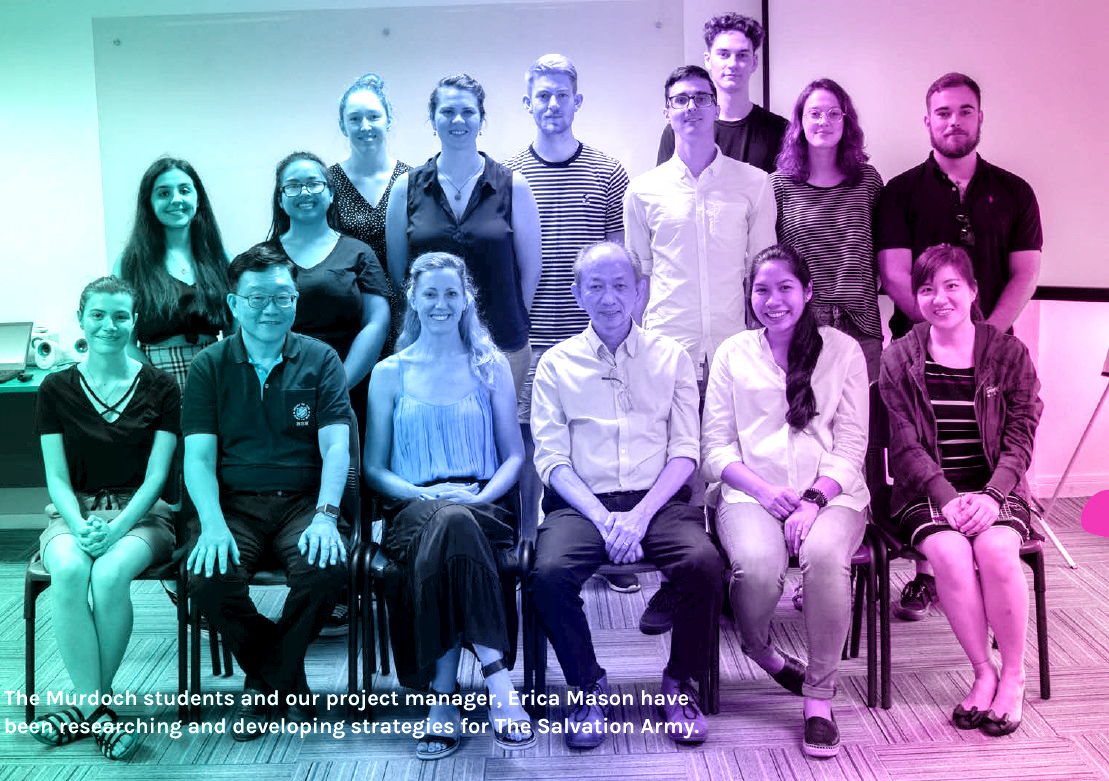
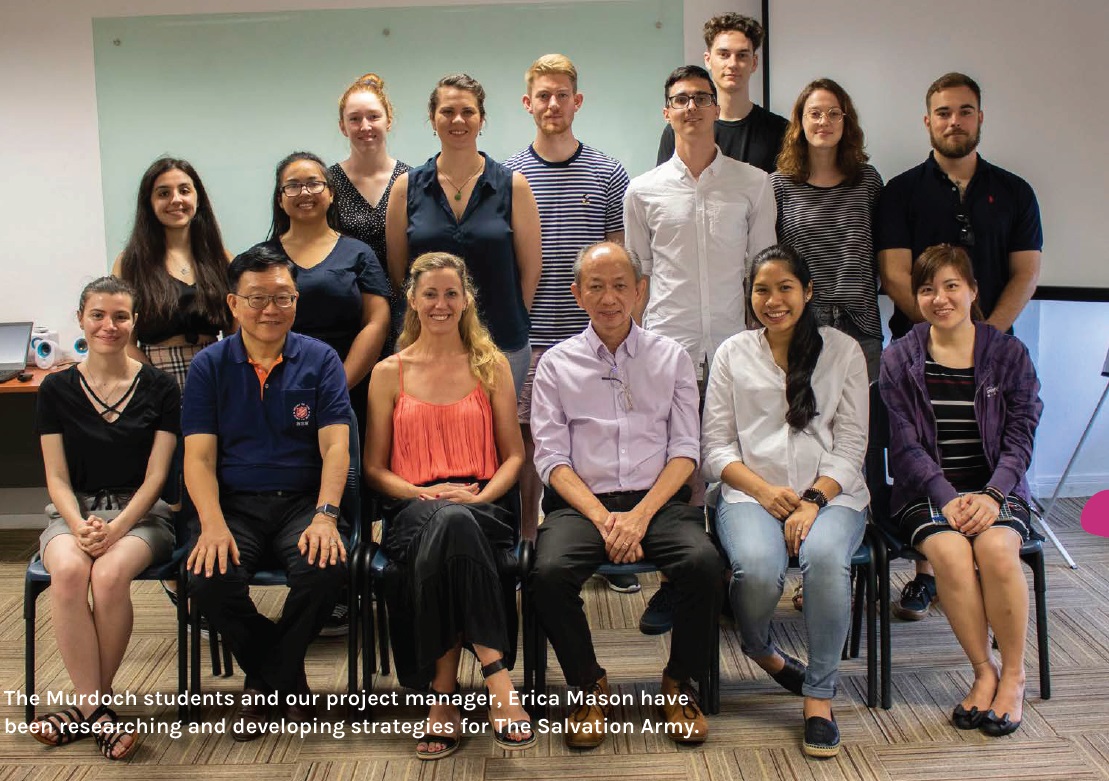
Thanks to New Colombo Mobility Grant a 3rd yr group of Murdoch University Graphic Design students spent 2 weeks in Singapore working with the Salvation army to address some issues with their second-hand stores.
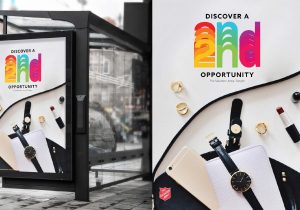
The team worked together to create strategies that aimed to help The Salvation Army address issues such as a lack of awareness about their second hand stores, education about the Salvos, as well as a negative stigma towards second-hand shopping. The strategies that the team co-designed with the Salvation Army aimed to re-educate the public, encourage customer interaction, and to help re-brand The Salvation Army, with the intention of promoting their community services and to inspire positive experiences.
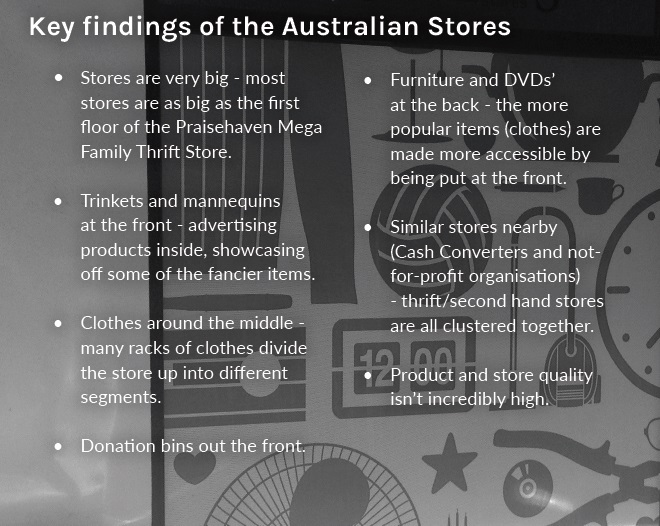
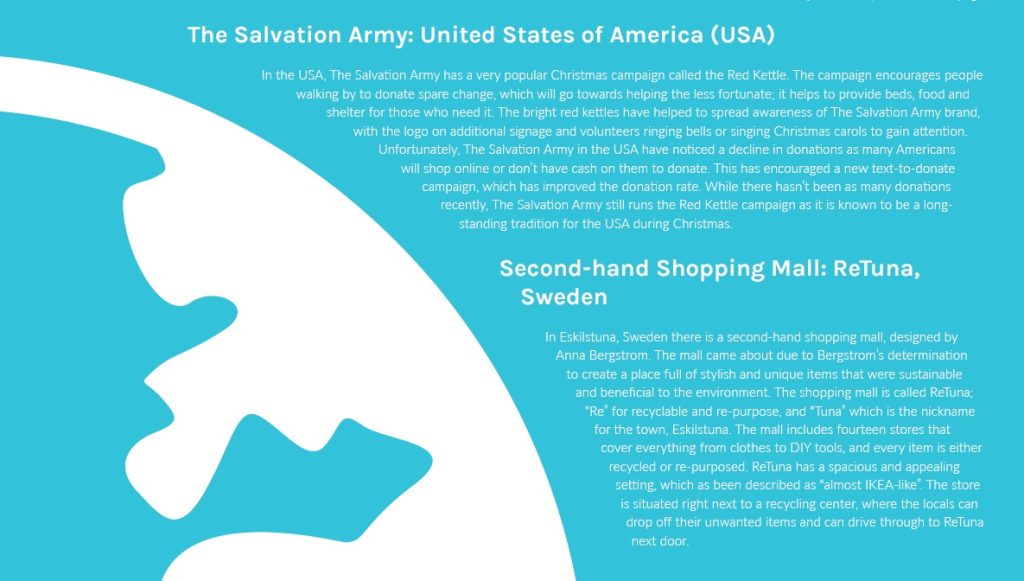
The project began with an Initial Research Stage by investigating the Salvation Army operations in Australia and overseas.
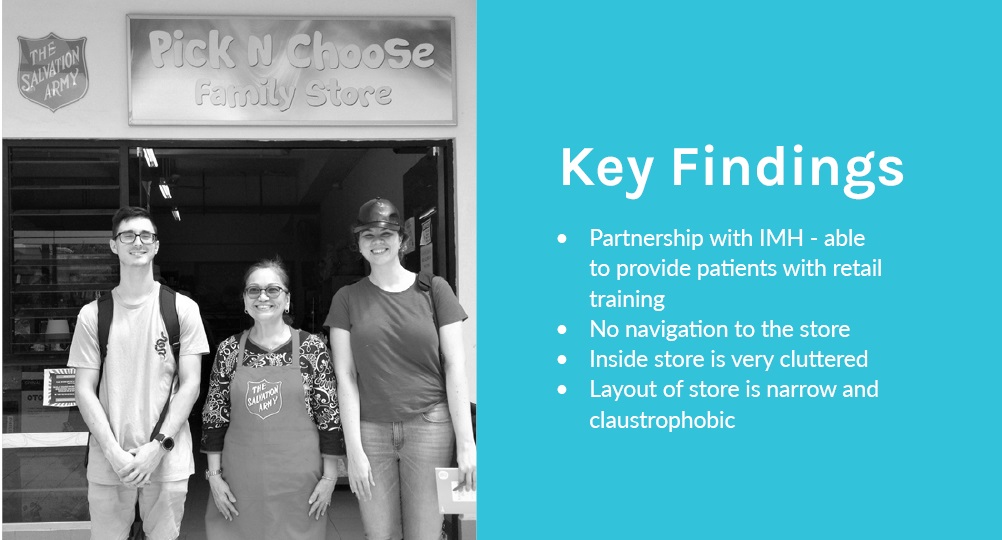
The second phase of our research involved further developing our understanding of the needs of The Salvation Army in Singapore. Our project manager, Erica Mason, organised a meeting between our group, The Salvation Army and the Red Shield Industries’ representatives. Shortly after this, we would visit and research into the individual Salvation Army Family Hubs throughout Singapore.
Competitor Research:
We began investigating into The Salvation Army’s competitors in Singapore to help us see what works for them and how we can help The Salvation Army stand out. This was an interesting area to research because unlike Australia, where we have charities like St. Vincent De Paul and The Good Samaritans, The Salvation Army in Singapore does not have any direct competitors that do similar community work. However, we did find many stores that shared the same interest in recycling and wanting to make the shopping experience fun for customers.
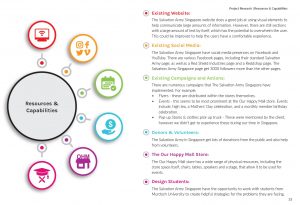
Resources and Capabilities:
During our research, we performed a few Design Thinking exercises to help us understand what resources and capabilities we have available to us. Understanding this helps us to develop an effective and appropriate strategy to address the initial problem. Parts of this exercise also enabled us to explore what The Salvation Army wishes to accomplish by addressing these issues. This furthered our empathy and passion for The Salvation Army’s work and has motivated us to see the problem on a personal level as well as a professional level.
Intentions and Visions:
This exercise inspired us as a group as we got to see how our personal visions and intentions align with those from The Salvation Army. We found that we had shared ambitions to make a positive change and provide help and care to others. Having shared goals helped us to empathise with the representatives and motivated us to create the best work possible.
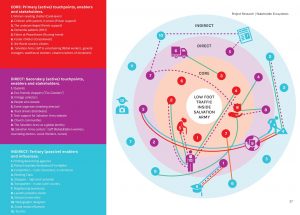
Stakeholder Ecosystems:
We went on to outline the individuals that had a relationship with the Salvation Army, as well as the depth of their connection to the group and the problem. We then looked into the relationships these stakeholders had with each other and how they would come into contact with each other. This gives us an idea of who to focus on when addressing this problem, as well as giving us an understanding of how they all connect. We can use this information to help us devise strategies that reach the right people in the right way.
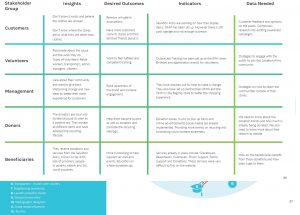
Stakeholder Outcomes:
Another workshop we completed with this information was to put together a table that explored our insights into various stakeholders groups. Stakeholders are groups or individuals that are affected by the operations of the Salvation Army. The table expands on what we already know about each stakeholder, what we want to happen, while also identifying any strategies that are currently in place and outlining any resources/ data that we may still need to learn more.
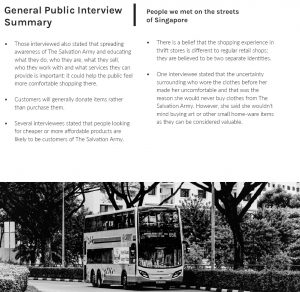
Interviews:
We also wanted to learn more about the individual stakeholders who would be affected by any changes made within The Salvation Army. In order to accomplish this, we went out to interview people who fit into the various categories of stakeholders we had established. These are some of the notes we took from these interviews.
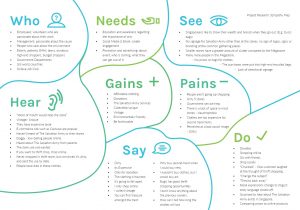
Empathy Map:
After completing our interviews, our next step was to develop an empathy map. This exercise allows us to empathise with Singaporeans who benefit, use, or want services from the Salvation Army. We mapped out what they hear, see, do, say, as well as their pains and gains. These were mapped out in regards to their responses from our interview research conducted in Singapore. Through this, we have a deeper insight into their attitudes and behaviours towards the Salvation Army, both as an organization that provides aid, but also as a retail brand.
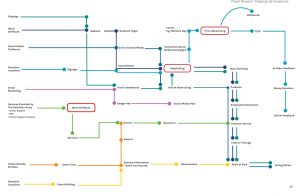
Mapping User Experience:
We developed personas based on the Stakeholder Outcomes activity to represent the more notable people from our research. A persona is defined as a specific character that is created to help us to empathise with the stakeholders and understand the issues they face when coming in contact with a brand. We used the personas we created to help us get a better grasp of our target audience for our strategies.
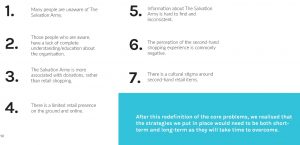
Redefining the Problem:
After all of our research, we felt that we had a comprehensive understanding of all of the core elements of this issue. From here, we had enough information to redefine the problem.
Developing Our Ideas:
We had collated all of our research. Now it was time to start thinking of ideas!
After all of our research, redefining of the problem and re-framing our thinking, it was time to develop concepts and strategies that could potentially assist with the core problems.
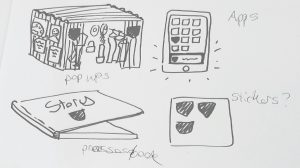
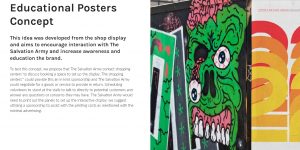
Together in two groups, we started thinking about potential concepts that could align with our strategy. We began to brainstorm by using our user experiences to inspire ideas on how and when a customer would come in contact with The Salvation Army. After we brainstormed in our groups, we came back together to present our ideas to each other. We worked together to see if there were any ideas that we could link or if any stood out amongst the group. Our ideas focused around history, branding and customer interaction.
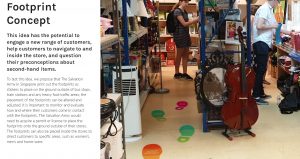
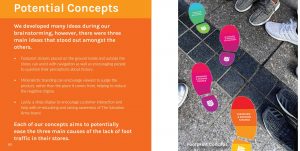
Three Proposed Concepts:
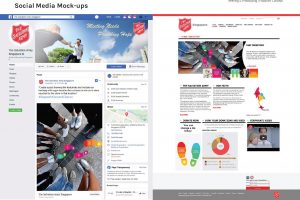
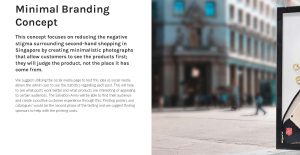
During this brainstorming, three main concepts stood out as the best options to potentially ease the awareness, education and branding issues that have been causing the lack of foot traffic.
Final Outcomes and Redefined Problems:
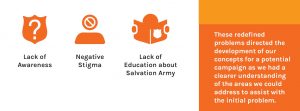
Our research helped us to discover the core problems regarding our initial issue; the lack of foot traffic. The three main problems include: